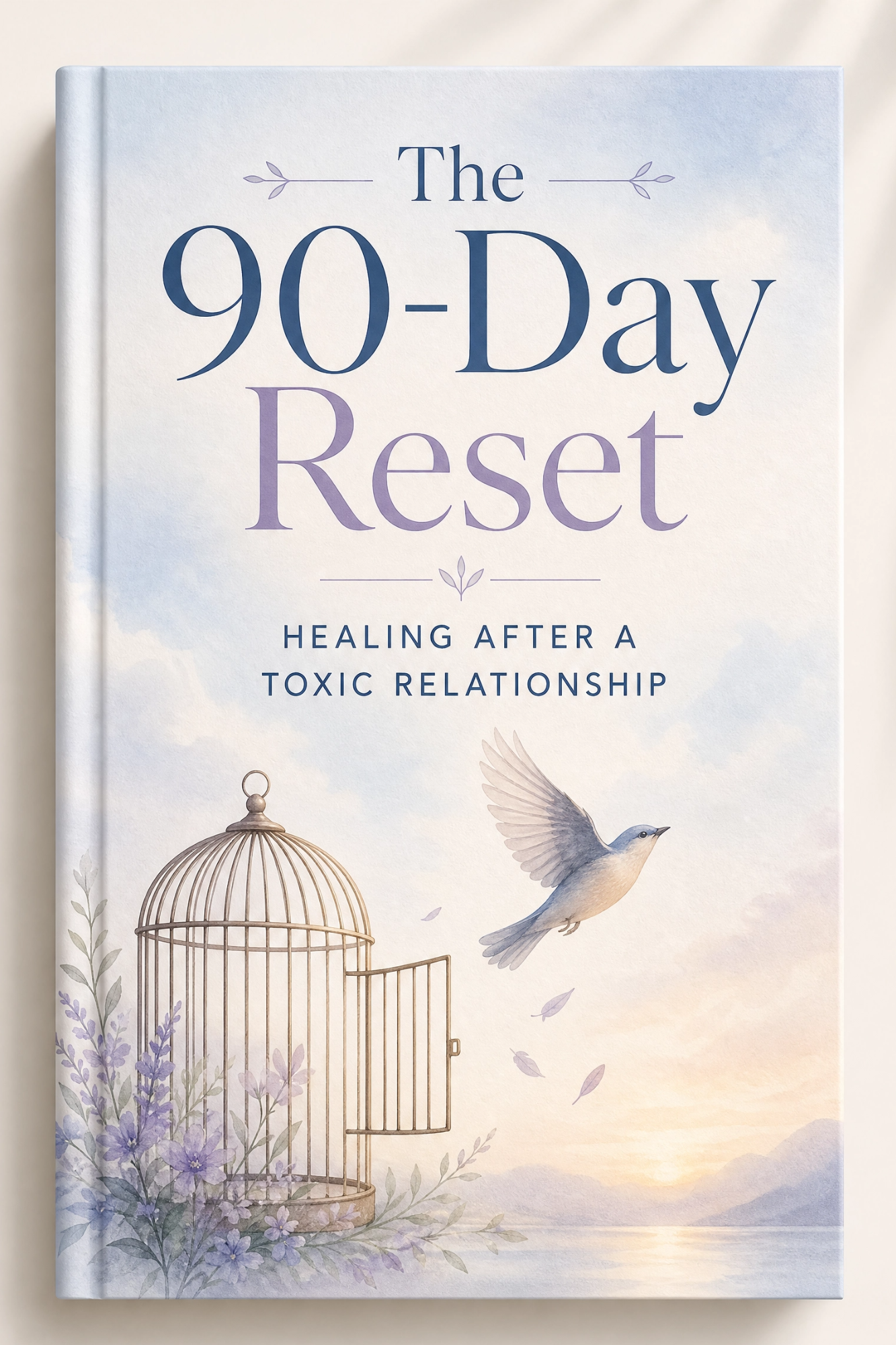
The 90-Day Rest: Healing After a Toxic Relationship
Leaving a toxic relationship is not the end of the story—it is the beginning of your healing. What many people don’t realize is that recovery is not just emotional; it is mental, physical, and deeply spiritual. That is why intentional rest is not a luxury during this time—it is essential.
The concept of a “90-day rest” is a gentle but powerful framework designed to help you reset your nervous system, reconnect with yourself, and rebuild your sense of inner safety after emotional harm.
Why Rest Is the First Step to Healing
After a toxic relationship, your body is often still in survival mode. You may feel anxious, drained, confused, or even disconnected from yourself. This is not weakness—it is a natural response to prolonged stress.
Rest allows your mind and body to:
- Regulate your nervous system
- Process emotional trauma safely
- Reduce cortisol and stress levels
- Restore your energy and clarity
- Create space for self-awareness and growth
Without rest, healing becomes rushed—and rushed healing often leads to repeated patterns.
What a 90-Day Healing Period Looks Like
A 90-day rest is not about doing nothing. It is about being intentional with your energy and protecting your peace.
During this period, you focus on:
- Emotional detox: Limiting contact with your ex and removing triggers
- Mental clarity: Journaling, reflection, and grounding practices
- Physical restoration: Sleep, nourishment, and gentle movement
- Spiritual reconnection: Meditation, affirmations, and inner work
Think of it as a sacred reset—a time where you choose yourself daily.
The Power of Journaling During Recovery
One of the most effective tools during this 90-day period is guided journaling. Writing helps you process emotions that are often too overwhelming to speak out loud.
Journaling can help you:
- Release suppressed feelings
- Identify toxic patterns and red flags
- Rebuild self-worth and identity
- Track your healing progress
- Strengthen your intuition
This is exactly why structured prompts and guided exercises can be so powerful—they give your healing direction when your thoughts feel scattered.
Signs You Are Healing (Even If It Doesn’t Feel Like It)
Healing is not linear. Some days you may feel strong, while others feel heavy. Both are part of the process.
You are healing when:
- You start choosing peace over chaos
- You feel less urge to check on your past
- You begin setting boundaries without guilt
- You reconnect with your needs and desires
- You allow yourself to rest without shame
Small shifts lead to lasting transformation.
Creating a Safe Space for Yourself
Your environment plays a major role in your healing journey. Creating a calm, supportive space can help you feel grounded and secure.
Simple ways to support your healing environment:
- Keep your space clean and clutter-free
- Use calming music or silence intentionally
- Incorporate candles, soft lighting, or calming scents
- Limit exposure to triggering content on social media
- Build a daily routine that feels gentle, not overwhelming
Healing thrives in safety—not pressure.
Your Healing Is Not a Race
There is no timeline you have to follow. The idea of 90 days is not about rushing your recovery—it is about giving yourself permission to fully pause, reset, and rebuild without distraction.
You deserve time to:
- Feel
- Rest
- Reflect
- Grow
- Become whole again